Implant Crowns: The Key to Restoring Missing Teeth
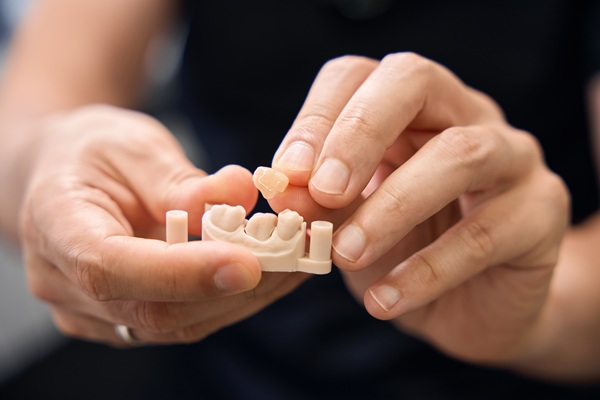
An implant crown is one of the most popular solutions for replacing a missing tooth, as it restores optimal function and aesthetics. Unlike traditional crowns that rely on existing teeth for support, an implant crown is securely attached to a dental implant, which acts as an artificial tooth root. While this tooth replacement is an effective solution, patients must understand the somewhat intricate process.
What is an implant crown?
Implant crowns are traditional dental crowns affixed to a dental implant. A crown is a custom dental restoration that resembles a cap that completely engulfs a natural tooth or, in the case of the implant crown, a portion of the implant. Its primary aim is to restore the function and aesthetics of a natural smile while preventing damage from occurring to the underlying structure.
The dental implant consists of two parts: the post and the abutment. While both parts comprise titanium materials, the dentist must embed the post into the jawbone. The abutment is attached to the top of the post and serves as an anchor for the crown. Together, these components create a secure, durable foundation for the implant crown.
Why implant crowns are the most effective replacement option
Implant crowns offer a range of benefits that go beyond simply replacing a missing tooth. From their natural appearance to their long-lasting durability, implant crowns provide patients with a comprehensive solution for restoring function and aesthetics. Here are some key advantages of choosing an implant crown:
- Natural appearance and functionality. Implant crowns mimic the function of natural teeth, allowing patients to chew and speak normally while blending in with the surrounding teeth.
- Preservation of jawbone. The implant post-fuses with the jawbone and acts as tooth roots, communicating to the jawbone that it must remain intact.
- Protection for surrounding teeth. Unlike replacement alternatives, implant crowns do not need the support of abutment (adjacent) teeth, leaving them unaltered.
- Durability and longevity. Unlike alternatives that need replacing every few years, only the crown portion will need to be replaced every 10 to 15 years with proper care, and the implant can last a lifetime with proper care.
Getting approved for implant crowns
While the benefits of implant crowns are undeniable, patients must be approved due to the invasive nature of the required procedures. The ideal candidate for implant crowns is an individual seeking a permanent, durable solution for a missing tooth or multiple teeth. Candidates should have good overall oral health and sufficient jawbone density to support the dental implant, as the implant serves as the foundation for the crown. Healthy gum tissue is also important, as it supports the stability and longevity of the restoration. Patients who do not smoke or are willing to stop during the healing process are more likely to experience successful outcomes, as smoking can interfere with osseointegration—the process by which the implant fuses with the jawbone.
The candidacy process begins with a comprehensive dental evaluation, during which the dentist examines the patient's oral health, reviews medical history, and uses imaging tools such as X-rays or 3D scans to assess bone density. Additional procedures like bone grafting may be recommended if the jawbone is insufficient before proceeding. The dentist will also discuss the patient's goals and expectations to determine if an implant crown aligns with their needs. This thorough assessment ensures that the treatment plan is tailored to the individual, maximizing the chances of a successful and lasting restoration.
The process of getting an implant crown
Note that receiving an implant crown does not happen in one appointment. In fact, it takes multiple spread across several months. While timelines can vary, the process typically goes as follows:
- The first procedure involves creating an incision in the gum line and drilling a hole in the jawbone before placing the implant's post.
- Following the first procedure, patients will enter osseointegration, a few-month-long process that allows the post to fuse with the jawbone.
- The second procedure involves reopening the gum line to affix the abutment onto the post and get appropriate measurements for crown fabrication.
- The final appointment involves bonding the custom crown onto the abutment.
Restore a complete, healthy smile
Implant crowns mimic the appearance and performance of natural teeth, providing patients with a complete smile and improved oral health. From their aesthetic appeal to their long-lasting durability, these restorations may be exactly what you need. Do not hesitate to give us a call. The sooner you schedule a consultation, the closer you will get to a complete smile. Contact Island Paradise Dental to schedule a consultation today.
Request an appointment here: https://www.islandparadisedental.com or call Island Paradise Dental at (239) 465-4999 for an appointment in our Marco Island office.
Check out what others are saying about our dental services on Yelp: Dental Implants in Marco Island, FL.
Related Posts
It is amazing the amount of confidence that comes from the options for replacing missing teeth. The absence of a tooth or even multiple teeth can make daily tasks like eating and speaking more difficult than they must be. For those who suffer from this, just having the ability to learn more about options can…
There are a variety of common reasons people are missing teeth. Missing teeth can cause many oral health problems, including difficulty chewing food and the gradual movement and misalignment of your teeth over time. However, there are solutions to dealing with missing teeth, including dental implants, implant-supported bridges, and removable partial dentures. Read on to…
Permanent tooth loss can be devastating, affecting your appearance as well as your oral and overall health. Fortunately, dental implants give people the opportunity to fully restore their smile with a prosthetic replacement. There are many benefits to choosing dental implants to replace lost teeth, including: Lower risks for bone loss Natural-looking results Protection from…
There are many options for replacing missing teeth, but how can replacing missing teeth help your oral health? Replacing missing teeth is the best way to prevent tooth decay, gum disease, and jawbone deterioration. Options for replacing missing teeth are dental implants, dentures, or dental bridges. Choosing which option will work best for you depends…